Roof-Mounted or Ground-Mounted Panels: What Changes?
Compare roof-mounted or ground-mounted panels for space, access, shade, and connection routes so you can spot property constraints before choosing a site.
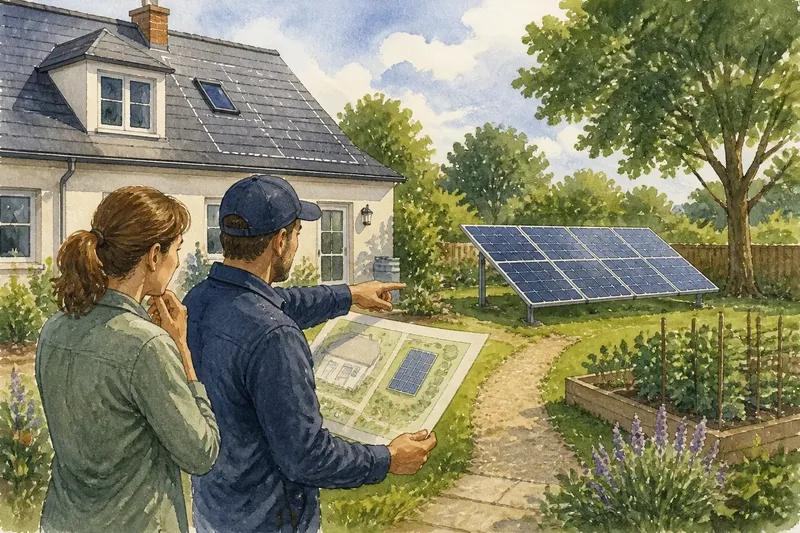
The most common mistake with roof-mounted or ground-mounted panels is choosing by the sunniest-looking spot alone. That can cost time during planning if a roof is hard to access or a ground site leaves no practical route to the house. Compare the whole setting before settling on a location.
Roof mounting uses part of the home; ground mounting creates a separate array on the property. Each option brings different constraints, from roof condition to yard access, so the best fit depends on how the proposed site works with the rest of your home.
Why can a suitable-looking roof become awkward?
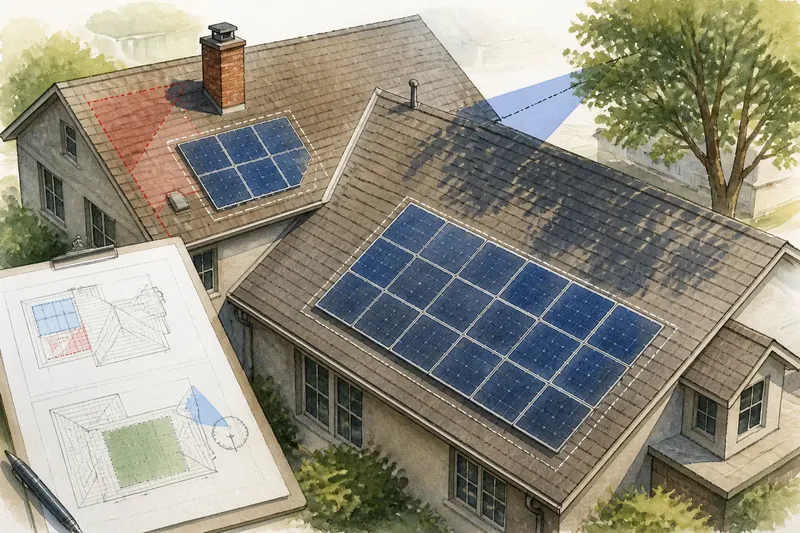
From the yard, a broad roof plane may look simple to use. But dormers, vents, chimneys, skylights, and roof sections facing different directions can interrupt the usable area and complicate the layout.
Access matters, too. A steep pitch, fragile or aging roofing material, limited space near the edge, or a complicated roofline may make installation and later service more demanding. Discuss the roof’s condition and attachment details before equipment is placed there.
Ask the installer to mark usable roof areas on a drawing and explain how obstacles and access affect the layout. If roof repairs are already planned, discuss their timing before finalizing the array.
What makes a ground site less simple than it seems?
A clear lawn can suggest plenty of room, but trees may shade the site as they grow, slopes can complicate placement, and paths or garden beds may divide the space. The array also occupies land that might otherwise serve another purpose.
Ground-mounted panels are easier to approach from the yard, but the structure, supports, and route to the home all need space. A distant location may add complexity to the connection and cross an area you would rather keep clear.
Walk the candidate area and note shade, likely tree growth, drainage, access routes, and the uses you want to preserve. Treat a sunny patch as a candidate, not a finished site decision.
Why does distance from the house matter?
A roof array sits on the building it serves, while a ground array may be separated from it. That separation affects where an installer can route the electrical connection and how it enters the home. The longer or more complicated the route, the more carefully the property layout needs to be considered.
For a ground site, ask whether the likely route crosses a driveway, garden, retaining feature, or other area with competing uses. For a roof site, ask how the proposed route relates to the home’s existing equipment and entry points. These are planning questions for a qualified installer, not do-it-yourself wiring tasks.
Imagine a homeowner with a small, shaded roof section and a clear, sunny area near the house. The installer maps the ground array there and finds that it leaves the main path and garden usable; that may make ground mounting a better fit than squeezing panels onto the roof. If the same area were distant and its route crossed a busy yard, the roof might remain more comfortable despite having less usable space.
How does everyday access change after installation?
Roof-mounted panels stay out of the way during ordinary use, preserving yard space. But inspection or service may require roof access, and homeowners should not climb onto a roof to check equipment. Ground-mounted panels are easier to see from the yard, but occupy visible, usable space and may need protection from routine yard activity.
Consider seasonal tasks as well as installation day. Could a mower, garden hose, ladder, snow-clearing activity, or future landscaping interfere with the proposed location? Follow the manufacturer’s instructions and applicable local requirements.
For a ground site, mark the proposed footprint with stakes or temporary markers. Notice whether it interrupts a familiar route or changes how you use the yard.
Which site checks help compare roof-mounted or ground-mounted panels?
Use these checks to prepare for a site visit, not as a universal ranking. For each observation, note the decision it points toward and the alternative to discuss if the site presents a problem.
- Roof layout: Check the drawing for vents, chimneys, skylights, and fragmented roof planes. If they leave too little straightforward space, ask whether a ground site is feasible; otherwise, discuss which roof area best fits.
- Roof condition and access: Check for planned repairs, fragile material, a steep pitch, or difficult access. If repairs are pending, coordinate them before installation; if access is the concern, ask the installer to compare a ground location.
- Ground footprint: Mark the proposed array area and check whether it blocks a path, garden, or planned project. If it displaces a use you want to keep, consider another site or compare roof placement.
- Shade and tree growth: Note existing shade and nearby trees that may grow or spread over time. If shade is likely to become a problem, ask the installer to assess another location; otherwise, include the site in the comparison.
- Connection route: Trace the likely route between a ground site and the house. If it crosses a driveway or sensitive area, ask about a different site or roof mounting; if it stays clear, have the installer confirm the route.
- Routine access: Check how people, tools, and yard equipment move near the proposed array. If access would be awkward, revisit the placement; otherwise, confirm it still leaves ordinary yard tasks workable.
- Appearance and visibility: View the proposed location from the rooms, outdoor spaces, and approaches you use most. If it feels intrusive, ask about another roof plane or ground location; if it fits, include appearance as one factor rather than the only one.
For example, imagine a homeowner marks a ground site beside the house, then traces the proposed connection route across the only path to the garden. The installer identifies an alternate route that avoids the path but would require a different layout. The homeowner compares that trade-off with the available roof area and chooses the site whose access and yard use work better; the decision turns on the actual route, not sunlight alone.
What should you ask before settling on a location?
Can a roof-mounted array be expanded later?
Future changes depend on the roof layout, available space, equipment arrangement, and installation details. Ask what space the proposed placement leaves available and what changes could require additional work.
Is ground mounting always easier to service?
It is generally easier to approach from the yard, but that does not make every service task simple or safe for a homeowner. Ask what access the equipment needs and follow the manufacturer’s guidance.
What if trees shade the ground site?
Consider current shade and how nearby trees may change as they grow. Ask the installer to assess the location and discuss alternatives before deciding to remove or alter landscaping.
Who decides whether a roof or ground location is allowed?
Requirements can depend on local rules, property conditions, and the installation. Ask the installer to identify applicable approvals, and check unresolved requirements with the relevant local authority or a qualified professional.
How can you avoid a late change of plan?
Before approving a layout, ask to see where the panels, supporting equipment, and connection route are expected to go. For roof mounting, confirm that the drawing reflects actual roof features and access concerns. For ground mounting, check the footprint and route against paths, planting, and other property uses.
Tell the installer about planned roof work, landscaping, or changes to how you use the yard. Ask what could make the preferred site impractical and what alternative would remain. A short, specific conversation can prevent a layout from being chosen on appearance alone.
The best choice between roof-mounted or ground-mounted panels fits the whole installation setting: usable placement, realistic access, and a connection route that works with the home. Before deciding, stand where the array would go and trace how people, equipment, and everyday activities would move around it. That small check can reveal a conflict a roof photograph or property sketch may miss.