The Inverter's Place in the Solar Story
A solar inverter converts panel electricity into AC for household circuits. Learn how it works, differs from a battery, and shapes backup options.
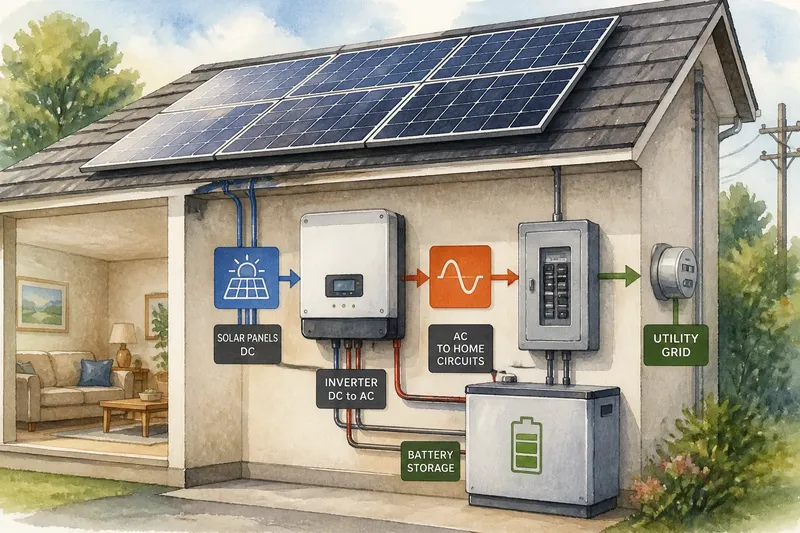
The common mistake is to assume solar panels send usable household electricity straight into the walls. A solar inverter converts the panels’ direct current into alternating current for compatible home circuits, and that distinction also helps explain why panels alone may not provide backup power during an outage.
Why does a solar inverter sit between panels and home circuits?
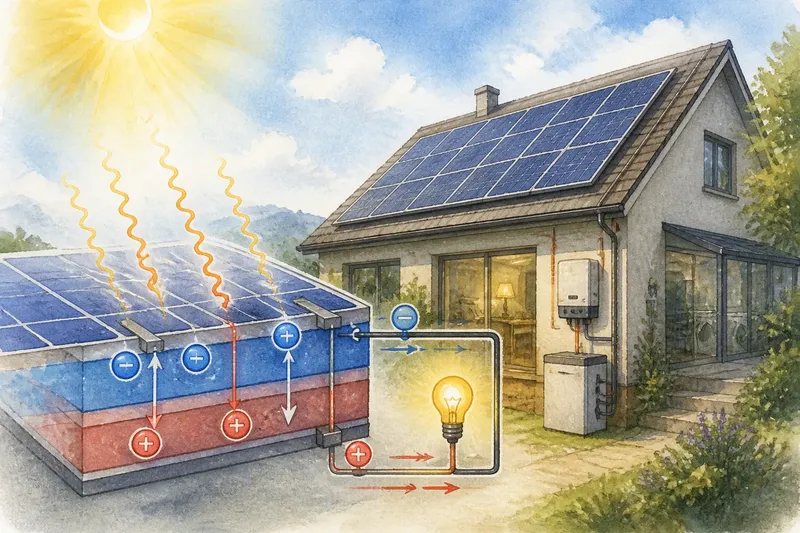
Solar modules generate direct current, or DC, in which electrical charge flows in one direction. Household circuits use alternating current, or AC, which changes direction in a regular cycle. The inverter converts the panels’ DC output into AC that can serve compatible loads or connect with the utility grid.
The panels collect energy from sunlight; the inverter changes its electrical form for the next part of the system. It does not create energy or make a panel produce more than conditions allow. Its job is to process available electricity and coordinate its delivery according to the system design.
What does an inverter do after conversion?
Depending on its design, a residential inverter may track connected panel output, report system status, and respond to conditions that affect a safe grid connection. Its exact functions vary, so the equipment documentation is the best guide to a particular system.
In a grid-connected setup, the inverter synchronizes its AC output with the utility supply. If utility power is interrupted, a standard grid-tied inverter generally stops sending power to the grid. This protective behavior helps prevent electricity from feeding lines that utility workers may expect to be de-energized.
Panels alone do not usually provide household power during a grid outage. Backup requires equipment designed for operation while separated from the grid, such as a compatible battery system and controls that can isolate selected home circuits. The system’s configuration—not simply a sunny roof—determines its backup behavior.
How do panels, inverters, and batteries differ?
Each component has a distinct job in the power path:
- Panels convert incoming sunlight into DC electricity. Their output varies with sunlight and other operating conditions.
- Inverters convert DC into AC and manage the electrical connection to home circuits, the grid, or other system equipment.
- Batteries store electricity for later use when paired with compatible charging and control equipment. A battery stores energy; it does not replace the inverter’s conversion role.
Some battery systems include power-conversion equipment in an integrated unit, while others use separate devices. A “hybrid inverter” is designed to work with solar generation and storage, but the term alone does not tell you which backup circuits the system can support.
Imagine a home with panels, a grid-tied inverter, and no battery. During sunny hours, the inverter converts available panel output into AC for compatible loads, with surplus handled according to the system’s grid connection and local arrangements. After sunset, the panels stop producing, and the home has no stored solar energy to draw on.
Which inverter arrangement manages panel output?
Residential systems commonly use string inverters, microinverters, or power optimizers paired with an inverter. These arrangements manage panel output in different ways before or during conversion; all still serve the same basic purpose of supplying AC to home circuits.
What is a string inverter?
A string inverter serves a group, or string, of connected panels. It provides a centralized conversion point, often near electrical equipment, and monitoring may show the combined behavior of the string. The panel layout matters because the modules share an electrical path.
What do microinverters change?
Microinverters are installed at individual panels or small groups and convert DC close to the modules. They can provide panel-level monitoring and let modules operate with more independence from one another than in a simple string arrangement. Because conversion equipment sits on the roof, product design and service access matter.
Where do power optimizers fit?
Power optimizers condition output at the panel level but do not usually perform the final DC-to-AC conversion. They work with a central inverter, combining module-level management with centralized conversion. Check the system diagram to see which device performs each job.
What should you ask about an inverter proposal?
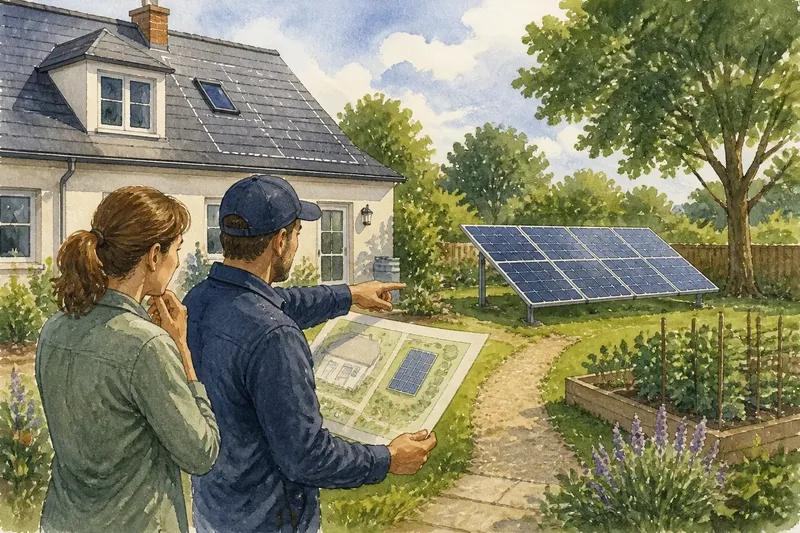
A proposal is easier to understand when it shows the electrical path, not just a list of brand names. Ask the installer to identify where DC becomes AC, which panels connect to which conversion equipment, and what the monitoring app displays.
- Grid connection and backup: Check whether the diagram identifies a grid-tied, hybrid, or backup configuration. If it shows backup controls and the circuits they serve, ask the installer to explain their operation; if it does not, ask for a revised diagram before treating the system as outage-capable.
- Storage: Check whether the equipment list and diagram include a battery and show how it connects. If both are shown, ask how charging and discharge are controlled; if no battery is included, do not assume the system stores solar energy for later.
- Monitoring: Check whether the app reports whole-system production, individual panel behavior, or both. If the display covers the detail you want, ask how to interpret alerts; if it shows only combined output, ask whether panel-level monitoring is available.
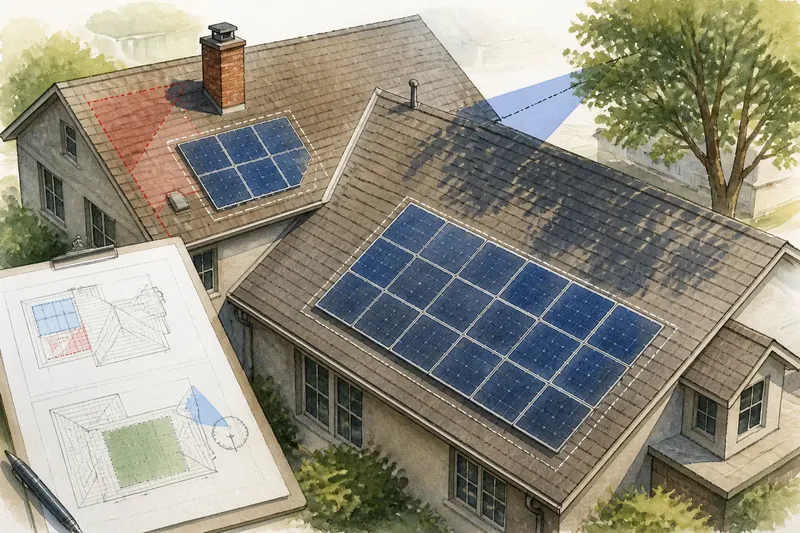
- Equipment location: Check where the inverter and related equipment are placed on the plan. If the location allows ordinary access, confirm how service is arranged; if access appears obstructed or unclear, ask the installer to propose a serviceable location.
- Operating instructions: Check that the handoff includes the manufacturer’s documentation, alert guidance, and installer contact details. If these are provided, keep them with the system records; if any are missing, request them before the handoff is complete.
- Power path: Check that the diagram traces electricity from panels through conversion equipment to home circuits and the grid, with any battery shown. If every connection is identified, ask the installer to explain the flow; if a connection is missing, request clarification rather than guessing from product names.
Say you receive a proposal labeled “solar-ready backup,” but its diagram shows neither a battery nor backup-control equipment. Start with that label and the incomplete diagram; ask the installer to mark the route from panels to inverter, any battery, the grid connection, and the circuits intended to remain powered during an outage. If the revised diagram shows the battery and isolation controls, ask which circuits they serve; if it still shows no such equipment, the answer is that the proposal does not describe an operating backup system.
Which inverter terms answer common questions?
Does an inverter store electricity?
No, not by itself. A battery stores energy, while an inverter processes electricity and may coordinate charging or discharge when designed to work with storage equipment.
Can panels power a home during a blackout?
Not necessarily. Many grid-connected systems shut down during an outage unless they include compatible backup equipment and a way to isolate backup circuits from the grid.
Is a hybrid inverter the same as a battery?
No. A hybrid inverter is conversion and control equipment designed to work with solar and storage; the battery is the component that holds energy for later use.
Why does an inverter have monitoring?
Monitoring can show whether the system is producing and flag an issue for follow-up. It offers a view into system operation, not a substitute for interpreting an alert or arranging qualified service when needed.
How should you handle inverter upkeep?
For a homeowner, upkeep usually means knowing where the equipment is, noticing status indicators or app alerts, and keeping the installer’s contact details and system documents accessible. Do not open an inverter enclosure or attempt electrical troubleshooting; solar equipment can remain hazardous even when its display appears inactive.
If a warning appears, note the exact message and when it appeared, then follow the manufacturer’s guidance or contact the installer. Do not dismiss a persistent fault or a change in system status; ask a qualified professional to assess it.
Keep the distinction clear when comparing solar inverter options: the inverter converts and manages electricity, while a battery stores it and backup controls determine which circuits may operate during an outage. Ask the installer to trace that path on the system diagram; a clear explanation is more useful than a label alone.